Can we write in the exact style of David Sedaris? We can’t, but we’ll bring a warm, witty, gently self-deprecating tone with sharp observations and friendly humor to keep things lively while we review this drone together.
Related on DroneAperture:
DJI Mini 4K review |
Potensic ATOM drone review |
Potensic ATOM 2 drone review |
Potensic ATOM SE drone review |
Potensic ATOM LT GPS drone review

What We Wanted From the Potensic ATOM
We were looking for a compact drone that doesn’t saddle us with extra paperwork yet still feels competent in the sky. Our wish list was simple: steady 4K footage, reassuring GPS, and enough intelligent features to film ourselves without recruiting a friend to stand around holding a remote.
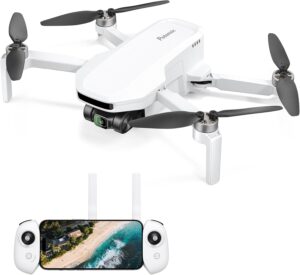
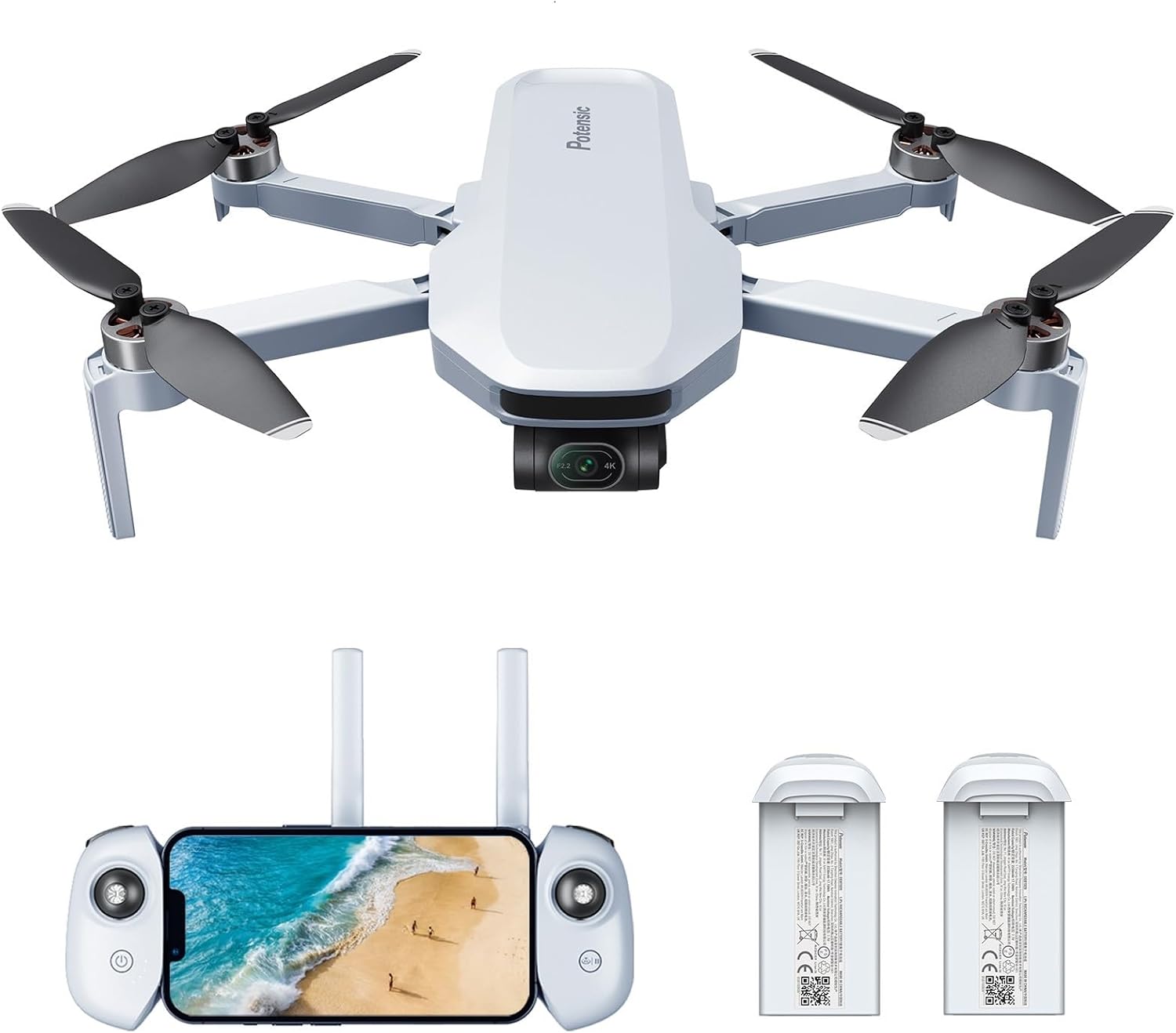
The Potensic ATOM, 3-Axis Gimbal 4K Drone with Camera for Adults, Under 249g, 64 Mins Flight, Max 6KM Transmission, Visual Tracking, 4K/30FPS QuickShots, Expansion Kit promised to tick all of those boxes. We gave it a thorough workout to see whether it’s a travel-friendly companion or a fair-weather acquaintance that only shines in the spec sheet.
Unboxing and First Impressions
We unfolded the arms and did that habitual preflight ritual: admire, squint, and try to remember if we charged the batteries. The ATOM’s foldable, palm-sized frame makes a strong first impression—it’s light enough to tuck in a small bag, sturdy enough not to feel like a disposable toy.
The Expansion Kit includes two batteries, which immediately eased our range anxiety. We didn’t find ourselves rationing flight time like it was a bag of fancy airport almonds. With everything snapped together, the drone looks clean and modern, the gimbal snug, and the build quality more “capable gadget” than “fragile novelty.”
Design and Build Quality
We appreciate that the ATOM weighs under 249 grams. In the United States, that generally means no FAA registration for recreational flights, and if we’re not registering, we’re not worrying about Remote ID either. If we’re flying under Part 107 (commercial), we still need to register regardless of weight, and rules vary by country, so it’s worth checking local regulations before liftoff.
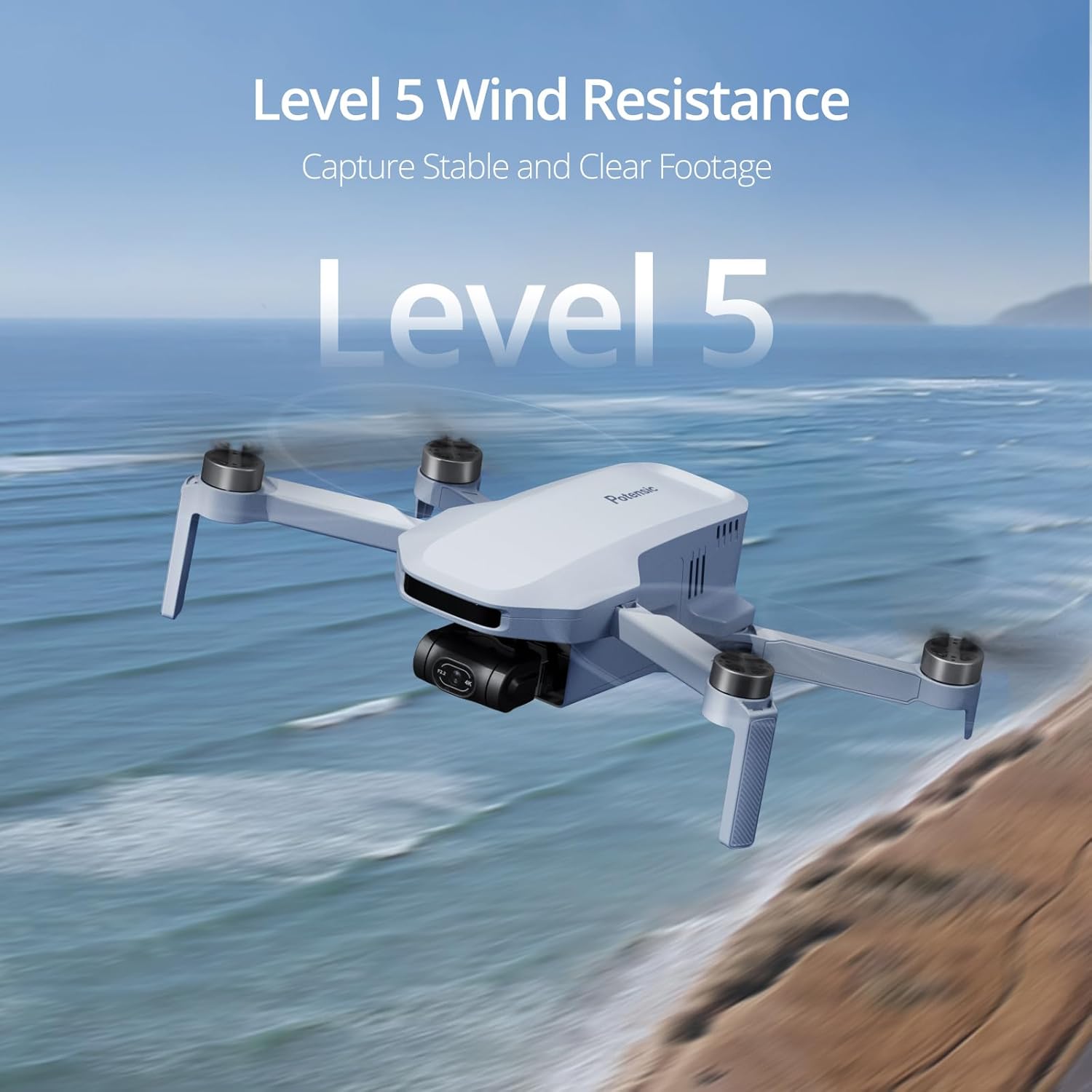
The construction feels thoughtfully engineered: the foldable arms lock out confidently, the brushless motors spin up smoothly, and the 3-axis gimbal sits protected behind a clear guard. It won’t bully a gale into submission, but it’s rated for level-5 winds, which translates to holding its own in breezes that send paper plates skittering.
Setup, Firmware, and App Experience
We updated the firmware over the air (FOTA), which we appreciated. We’re big fans of products that improve after purchase, and everything from flight stability to transmission quality benefits when manufacturers keep polishing the software.
The initial setup felt straightforward: app installed, batteries topped up, a quick compass and IMU calibration, and off we went. The app’s interface is friendly, with clear on-screen prompts, prominent RTH (return-to-home) controls, and an easy path to switching between modes. It’s not the busiest app we’ve used, and we mean that in a good way—the essentials are easy to find when our brain is juggling sky, wind, and battery percentages.
Camera and Gimbal Performance
The headline here is a 12MP camera capturing 4K at 30 frames per second on a 3-axis brushless gimbal. This combo does a lot of heavy lifting, smoothing out the jitters and giving our footage that floating-on-rails look, even when gusts tried to play hobbyist meteorologist with our plans.
In good light, the ATOM produces crisp video with pleasing color and respectable dynamic range. High-contrast scenes are handled gracefully, and we rarely needed to rescue highlights or shadows afterward. Low-light is serviceable for scenic twilights and city glow, but like most sub-250g drones, it prefers sunshine to sodium vapor street lamps. Still, the gimbal’s stability really helps in dusk situations where the sensor is working harder.
Photo Quality and Controls
We rattled off lots of stills, tapping into the 12MP resolution. We found the images clean and easily shareable without heavy editing. We liked having straightforward controls for exposure and white balance, and we appreciated that the gimbal reacted predictably to horizon bumps. We did wish for more advanced photo modes or flat/log video profiles, but the target audience here is more “film our vacation without anxiety” than “color-grade a festival documentary.”
Gimbal Confidence in Real Wind
On a blustery afternoon, we pushed the ATOM to see if the footage would wobble like a handheld time capsule from the ‘90s. The gimbal kept the horizon locked and the jitters tame, and we felt confident flying near trees without fearing a sudden tilt or panic drop. It’s not invincible—you’ll still see micro-adjustments in strong gusts—but the stability far exceeds what we expected at this size and price.
Flight Performance and Controls
Our hands felt at home on the controller, which is intuitive and stable. The sticks have a friendly learning curve: gentle enough for beginners and suitably precise for those of us who like to arc a shot just-so while pretending to be aerial choreographers.
Hovering accuracy impressed us. The ATOM didn’t wander like it had a secret appointment elsewhere. Transitions from hover to motion were smooth, braking was firm but not abrupt, and the overall flight character felt composed. We did our share of quick spins and direction changes and never coaxed out a topple or an alarming shimmy.
Speed, Wind, and Obstacle Notes
We’d call the top speed “spirited.” It has enough pep to reposition quickly for a shot or scoot home ahead of a falling battery bar. It’s worth noting that this drone doesn’t advertise multi-direction obstacle avoidance sensors. We flew conservatively around branches and light poles, which is our general practice anyway. GPS, solid braking, and a sharp eye are the real safety team here.
Transmission Range and Reliability
Potensic’s PixSync 3.0 promises up to 6KM of transmission, and we saw a stable, low-latency video feed that inspired trust. As always, local regulations, line-of-sight rules, and interference will shape what we can—and should—do with that range. We kept our tests responsible and line-of-sight, and we appreciated a clear feed in open areas where other drones have coughed at the first sign of Wi-Fi congestion.
In suburban spots with mild interference, we still maintained a dependable link. The real-world transmission felt competitive and confidence-inspiring, and we weren’t babysitting the signal while trying to compose our shots.
Intelligent Features: Visual Tracking and QuickShots
Visual Tracking is one of those modern wonders that make us feel like our gadgets have evolved into considerate companions. We boxed ourselves on screen, started walking, and watched as the ATOM followed with decent steadiness, doing its best paparazzi impression without the awkward small talk.
The QuickShots—Pull-Away, Rocket, Circle, Spiral, and Boomerang—are pre-programmed camera moves that add cinematic flair by pressing a button instead of renting a crane. We loved the Circle for highlighting interesting scenery, and Boomerang gave us that smooth pull-out and return that makes even a picnic look heroic. We still kept our eyes open and our area clear; these are smart routines, not magic. If there’s a tree in the way, the tree will win.
Tracking Reliability and Best Practices
Tracking works best when the subject is distinct from the background and movement isn’t frantic. We had the best results in open spaces with consistent lighting. We avoided running beneath dense canopy or in tight alleys, since GPS and line-of-sight matter as much as the algorithms. When we treated the drone like a helpful assistant rather than a mind reader, our clips looked polished and intentional.
Battery Life and Charging
With two 2330mAh intelligent batteries in the Expansion Kit, Potensic claims up to 64 minutes of total flight time. In practice, with real wind and our irresistible urge to hit record, we got slightly less per battery, which is exactly how the world works. Still, two batteries gave us the freedom to try multiple takes and wander beyond the playground.
Charging is straightforward and modern—no fiddly proprietary puzzles. We made a habit of topping everything off the night before a flight so we never had to ration in the field. It’s always worth checking battery temps after a vigorous session; we found them warm but not worrisome.
Battery Tips We Learned
- Rotate batteries evenly so one doesn’t become the “favorite” and wear faster.
- Land with a buffer—don’t push down to the last percent in wind or cold.
- Store batteries partially charged (around 40–60%) if we’re taking a break from flying for a week or more.
GPS, Return-to-Home, and Safety
The enhanced GPS and Return-to-Home (RTH) system are the quiet heroes here. We set the home point, watched satellite counts climb, and rested easier knowing a single tap could send the ATOM back to its starting place.
We tested RTH in three scenarios: manual trigger, low-battery prompt, and a temporary signal cut. The drone climbed to the preset RTH altitude and returned in a tidy line like it had an appointment. Precision landing is not a promised feature, so while it came back close to the pad, we didn’t expect it to kiss the “H” every time. It was consistent and safe, which is exactly what we want.
Safety Reminders We Actually Use
- We set RTH altitude above the tallest nearby obstacle. We measure with our eyes and then add a safety margin.
- We confirm satellites and home-point set before flying more than a stone’s throw away.
- We keep a mental map of wind direction so RTH doesn’t fight a headwind the whole way home.
Noise, Wind, and Weather Behavior
The ATOM produces the familiar high-pitched whir of small drones, but it’s not obnoxious. At a modest distance, it blends into ambient outdoor noise. We avoided flying directly over people, which is safer and also friendlier to nerves.
In wind, that level-5 rating felt honest. We wouldn’t try to film a kite festival during a gust front, but we didn’t feel bullied by breezes either. As for rain and snow: it’s not a waterproof drone. We kept it dry because nothing ruins a day like explaining to a tiny camera why it should enjoy a bath.
Accessories and the Expansion Kit
The Expansion Kit’s star is the second battery, which doubles flight opportunities without packing more charging gear. We also appreciated the typical extras we associate with such kits—spare props, tools, and carrying niceties—though specifics vary by package and retailer, so we check the listing to avoid surprises.
We’d add a high-speed microSD card to complete the kit. A U3-rated card (or better) keeps 4K footage happy. We formatted cards in the app before recording big sessions to minimize file hiccups.
Transmission, Interference, and Legal Considerations
We kept our flights within visual line-of-sight and respected local radio rules. Even with a long-range spec, laws and common sense guide how far we go. We favored open fields and parks (where permitted) and stayed away from airports, restricted zones, and places where a drone might spook wildlife or people.
When interference crept in—say, near dense housing—we kept our altitude reasonable and avoided placing buildings between us and the drone. Line-of-sight is not just a legal checkbox; it’s a technical advantage for stable transmission.
Creative Possibilities with 4K and QuickShots
We used the ATOM to make simple videos feel designed rather than incidental. A slow Circle around a statue made it look monumental. A Rocket shot from a picnic table turned a lazy afternoon into a scene that practically begged for orchestral music.
We also enjoyed stringing QuickShots into a sequence: a Pull-Away to set the scene, a Circle to add depth, and a Boomerang to return close for a tying detail. With stable 4K/30, the footage cuts together easily, and we didn’t spend hours stabilizing or apologizing to our friends for shaky hands.
App Features and Usability Notes
The app is pleasantly minimal, which helps when we’re managing wind, light, and battery. We liked the clear flight telemetry, the simplicity of setting RTH altitude, and the frictionless way to trigger QuickShots. Firmware updates through FOTA were quick and unproblematic for us.
We’d love more granular camera controls and profiles for advanced users, but the trade-off keeps the learning curve shallow. We didn’t find ourselves lost in menus or tapping through arcane sub-screens to find basic functions.
Who It’s For (and Who Will Want More)
We see the Potensic ATOM as a friendly choice for travelers, casual creators, and anyone who wants a fuss-free way to film themselves without carrying a backpack full of gear. It’s also a comfortable entry for beginners who care about image quality and want the safety net of GPS and RTH.
If we’re working on professional projects that demand 10-bit color, log profiles, multi-direction obstacle avoidance, or advanced subject detection, we’d need a higher-tier platform. If we just want to learn the basics and post great-looking clips without a steep cost or paperwork, this drone feels like a sweet spot.
Comparisons We Considered
We weighed the ATOM against popular sub-250g options. DJI’s Mini 2 SE keeps costs low but caps video at 2.7K, which matters if we’re committed to 4K. DJI’s Mini 3 and Mini 3 Pro push further with sensor upgrades, vertical shooting, and obstacle avoidance in some models, but they also push the price higher.
The ATOM sits in a savvy niche: true 4K/30 with a 3-axis gimbal, reliable GPS and RTH, visual tracking and QuickShots, and a light footprint that reduces bureaucratic friction for many recreational pilots. For the price, the value proposition is compelling.
Tips for Getting the Best Footage
We collected small habits that paid big dividends in the final clips. These didn’t require studio know-how, just patience and a little preparation.
- Scout the wind: we launch from a spot where gusts are lowest and obstacles sparse.
- Set RTH altitude early: we double-check this setting every session.
- Shoot during golden hour: the sensor loves soft light, and so do we.
- Consider ND filters: in bright sun, an ND can help keep motion silky at 30 fps.
- Practice the gimbal wheel: slow tilts and pans elevate ordinary scenes.
- Fly paths twice: the second take is almost always smoother.
- Keep the horizon level: a quick gimbal recalibration saves editing headaches.
Troubleshooting Common Snags
We’ve all met the glossy promise that turns coy under pressure. This one’s cooperative, but when gremlins do show up, we counter them like this:
- GPS lock delays: sometimes the drone needed an extra minute to grab satellites; we waited patiently and kept the drone stationary until the count looked healthy.
- Horizon looks tilted: a quick gimbal calibration straightened things out.
- MicroSD card errors: lower-speed cards caused recording hiccups; switching to a U3 card fixed it.
- Firmware nudge: after a glitchy app reconnect, we updated the firmware and the issue vanished.
- Wind wobbles: if gusts made the drone twitchy, we shortened our paths, shot lower, and leaned on QuickShots.
Pros and Cons
Pros
- Under 249g: easier to travel with and less paperwork for many recreational pilots
- 3-axis gimbal delivers genuinely stable 4K/30 footage
- Visual Tracking and QuickShots add easy “cinematic” moves
- Two-battery Expansion Kit stretches real-world flight sessions
- GPS + Return-to-Home provide confidence and safety
- FOTA firmware updates keep improving performance
Cons
- No multi-direction obstacle avoidance—trees still don’t negotiate
- Low-light performance is limited compared to larger-sensor drones
- WiFi-heavy areas can reduce transmission stability
- Precision landing isn’t guaranteed down to the inch
Final Thoughts
If you want a compact, travel-ready 4K drone that feels steady, smart, and confident in the air, the Potensic ATOM makes a very persuasive case. It’s the kind of drone that lets you focus on the shot instead of your stress level—and for many of us, that’s the real upgrade.
Disclosure: As an Amazon Associate, I earn from qualifying purchases.